
Mini-excavator, 1.7t to 3.5t
Suburban sites, drainage, landscaping and hire-fleet work. The most common first machine for a New Zealand owner-operator, and the class where attachments are the largest share of the total price.
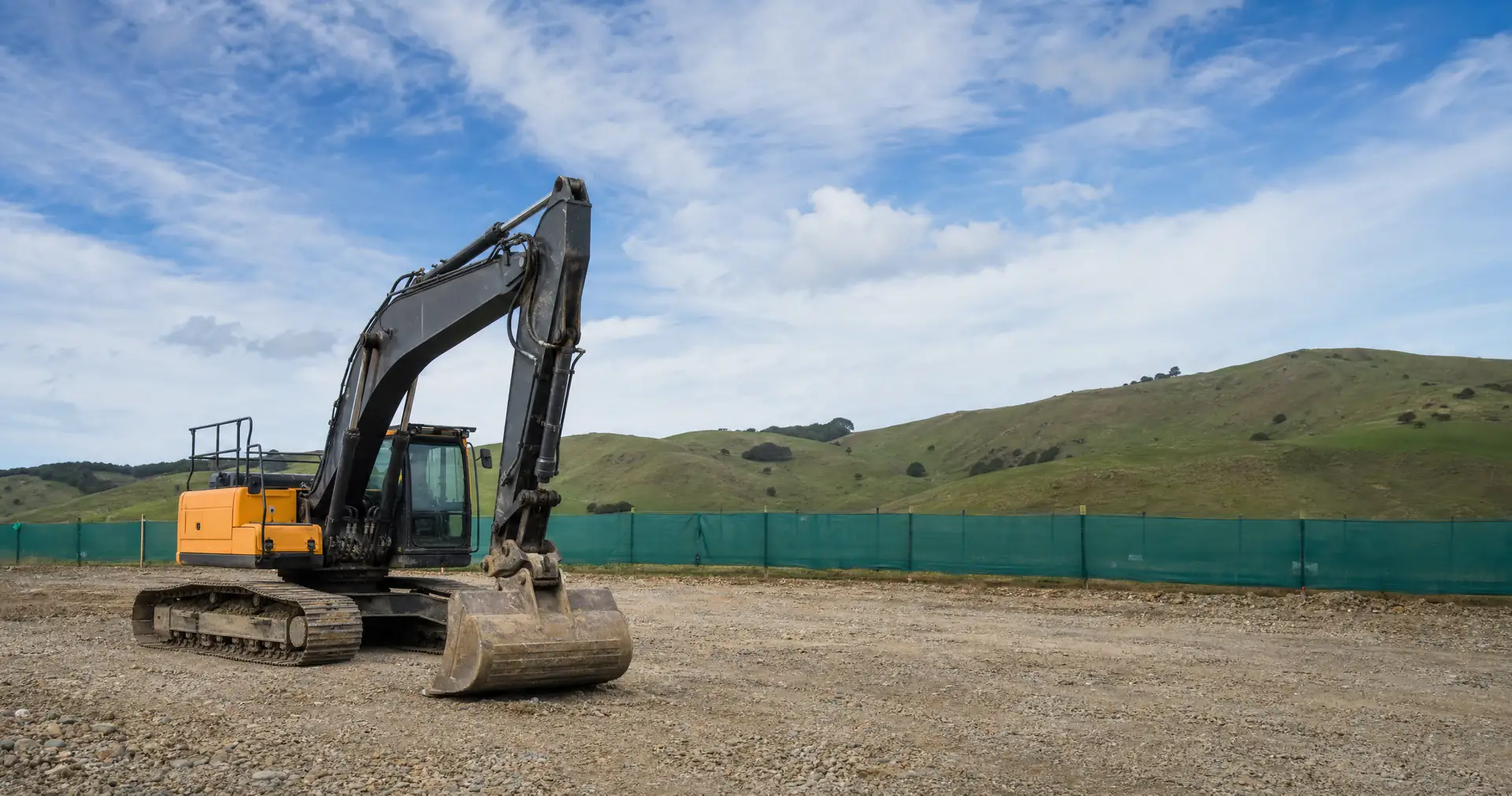
Earthmoving plant is among the most heavily financed equipment in New Zealand, because the machines are expensive, the resale market is national, and the hour meter gives a lender something objective to price against.
Last reviewed 7 September 2026
Indicative repayment
Weekly
$588/week
Indicative only. Not a quote or offer of credit. Actual rates, fees, and repayments depend on the business profile and the lender's decision.
Sending to Prospa
5 years at 10.00% . Prospa will ask a few quick questions, then provide a firm quote and funding if eligible.
Redirecting…
The short version
What it is
Excavator finance is a secured facility over an identified machine. The lender registers a security interest on the Personal Property Securities Register, the contractor uses the machine from settlement, and the debt reduces on a fixed schedule. If the payments stop, the lender has a defined route to recover and sell the machine, and that certainty is what keeps asset finance priced below unsecured lending for the same borrower.
Earthmoving plant sits well with lenders for reasons specific to it. Serial numbers are stamped and traceable, the hour meter is an objective read on remaining life, machines travel on a truck so the buyer pool is the whole country rather than one region, and demand is broad enough that a repossessed 8 tonne machine sells without a specialist auction. Very large machines, very old machines and heavily modified ones are all financed too, but the pool of lenders narrows and terms shorten.
What gets financed is the machine plus what makes it work. A hydraulic quick hitch, a set of buckets, a breaker, an auger, a tilt bucket and freight to the first site are commonly rolled into the same agreement where they are part of the same purchase. Consumables, ground engaging tools that wear out inside a year, and servicing are not, and contractors commonly budget those against the job rather than against the finance.
Common size band
5t to 14t
Indicative rate band
8% to 15% p.a.
Hours a lender notices
Above ~6,000
Registered on
PPSR
By size class
Indicative New Zealand purchase bands, illustrative only. Hours, condition, attachments, undercarriage wear and whether the machine is new, near-new or an older import all move these considerably. A dealer quote for a specific machine is the only number that decides a purchase.
Suburban sites, drainage, landscaping and hire-fleet work. The most common first machine for a New Zealand owner-operator, and the class where attachments are the largest share of the total price.
The workhorse band for residential civil and utilities work. Deep used market, long terms available, and the size most commonly financed on a five-year hire purchase.
Subdivision earthworks and larger civil contracts. Machines here are usually bought against a named contract, and lenders commonly ask what that contract is.
Quarry, forestry and major civil work. A small New Zealand buyer pool, so deposits are larger, terms shorter, and specialist financiers do more of this than banks.
Sitework, farm yards and demolition. Attachment-led machines where the carrier is often less than half of what is actually being financed.
Yards, quarries and transfer stations. Long working lives and steady demand, which supports longer terms on well-maintained units.
Construction reach work. Sits across the boundary between earthmoving and materials handling, and is commonly quoted on plant rather than forklift terms.
Breakers, augers, tilt hitches, grapples and bucket sets. Financed inside the machine agreement where bought together, and on their own only where the amount justifies a separate facility.
The common case
Indicative bands
Indicative bands only, and not an offer of credit. Lenders assess the business first and the machine second, so a strong trading history commonly moves these more than the machine does.
| Machine condition | Typical maximum term | Deposit commonly sought | Notes |
|---|---|---|---|
| New | 60 months | 0% to 10% | Longest terms and the widest lender pool. Dealer programmes commonly compete with independent financiers here. |
| Under 3,000 hours | 48 to 60 months | 0% to 15% | Treated close to new by most lenders. Service records carry weight in this band. |
| 3,000 to 6,000 hours | 36 to 48 months | 10% to 20% | The largest part of the used market. Undercarriage condition is assessed separately from the hour meter. |
| 6,000 to 10,000 hours | 24 to 36 months | 20% or more | A smaller pool of lenders. A recent independent inspection matters more here than anywhere else. |
| Over 10,000 hours | Case by case | Often 30%+ | Frequently declined as asset finance and funded on an unsecured facility instead, at unsecured pricing. |
Indicative New Zealand market bands for excavator finance by machine condition. Illustrative, not an offer.
Tax and GST
Under a hire purchase, a GST-registered business is generally able to claim the GST on the full purchase price in the return covering the period the agreement begins rather than spreading it across the payments, subject to the accountant’s confirmation of the accounting basis used. Under an operating lease the GST is typically claimed on each rental as it is invoiced, again subject to the accountant’s confirmation. Depreciation follows ownership in the same way, so a hire purchase normally places the depreciation claim with the business while an operating lease does not. Inland Revenue publishes the applicable rates in its depreciation rate finder, and which category a particular machine falls into is a question the accountant is the right person to settle.
The alternatives
Contractors prioritising utilisation and long-run cost typically finance. Contractors prioritising flexibility across an uncertain pipeline typically hire. The right answer follows the forward workbook rather than the machine.
| Feature | Hire purchase | Finance lease | Dry hire | Wet hire |
|---|---|---|---|---|
| Who owns it during the term | The contractor | The financier | The hire company | The hire company |
| Operator included | No | No | No | Yes |
| Upfront cash | Deposit only | Often nil | Bond and first period | First period |
| Cost when idle | Full payment | Full payment | Full rate | None, off hire |
| Maintenance | The contractor | The contractor | Commonly the hirer | The hire company |
| Fits when | Utilisation is above roughly half-time | Replacement runs on a cycle | A defined job with an end date | Short peaks with no operator available |
The honest crossover point is utilisation. Below roughly half-time use across a year, hire commonly costs less than owning once servicing, insurance and idle payments are counted, and that comparison is specific to the contractor’s own workbook.
The process
Written as an observation of what commonly happens rather than as instructions. Every lender differs, and none of this is a guarantee of an outcome.
01
Same day once a quote exists
Asset finance is written against identified equipment, so a quote naming the make, model, year, serial number, hour reading and the attachment list is normally what opens the file. Attachments bought at the same time are usually listed on the same schedule rather than financed separately.
Documents commonly required
02
2 to 5 working days
Trading history carries more weight than the machine. Twelve months of bank statements is the common request, with financial statements added above larger amounts. Where the machine is being bought against a named contract, lenders commonly ask to see it, because it is a visible repayment source.
Documents commonly required
03
2 to 5 working days
On used machines above a threshold that varies by lender, an independent inspection is commonly required, covering undercarriage wear, hydraulic condition, hour meter integrity and structural repairs. A PPSR search runs at the same time, and on a private sale it is the step that matters most.
Documents commonly required
04
1 to 3 working days after acceptance
Once terms are accepted the financier commonly pays the seller directly and registers its own security interest on the PPSR. Transport to site is arranged between buyer and seller, and the first payment usually falls a month after settlement.
Documents commonly required
Insurance is a condition rather than an option, and on earthmoving plant it usually has to cover the machine in transit and on site. Settlement is often held until the certificate arrives.
Worked scenarios
Illustrative scenarios on stated assumptions. The figures are indicative and are produced by the calculator on this page rather than quoted by any lender.
Four years trading, one machine, adding a second
The contractor has a two-year utilities subcontract starting in eight weeks and needs a second 5.5 tonne machine to service it. A three-year-old unit with 2,400 hours is quoted at $96,000 plus GST, with a tilt hitch and three buckets bringing the package to $112,000.
On these assumptions a 60-month hire purchase at an indicative 10% carries a repayment in the region of $550 a week. The subcontract revenue covers that several times over, which is the comparison that decides it. The attachments sit on the same schedule as the machine, so the whole package is one facility rather than two.
Indicative figures
Eighteen months trading, first machine purchase
The operator has been dry-hiring a 1.8 tonne mini-excavator for a year and the hire cost has passed what a purchase would carry. A near-new machine with a hitch and bucket set is quoted at $52,000 plus GST.
The business is under two years old, so a deposit is sought. On these assumptions a 20% deposit and a 48-month term at an indicative 12% brings the weekly figure to roughly $250, which sits below the hire cost being displaced. The deposit is the price of the shorter trading history rather than a feature of the machine.
Indicative figures
Twelve years trading, replacing a 20 tonne machine
The existing machine is at 11,600 hours and repair costs have become unpredictable. A replacement is quoted at $310,000 plus GST, and the old machine has a trade value the dealer has put in writing.
In this scenario the trade value becomes the deposit, which reduces the amount financed and typically improves the indicative rate offered. The remaining balance on the old machine’s finance is settled from the trade rather than carried forward, and the point worth checking before signing is whether the trade value actually clears that balance, because depreciation on plant is front-loaded and it does not always.
Indicative figures
If it goes wrong
Asset finance is secured, and the consequence of default differs from an unsecured loan. Set out here as fact rather than as a warning, because it is part of what the structure is.
The financier registered its interest on the PPSR at settlement. On default it has a defined statutory route to take possession under the Personal Property Securities Act 1999, and earthmoving plant is straightforward to recover because it is transported rather than driven away.
What happens:The machine is recovered and the contractor loses the capacity it was carrying.
The machine is sold and the proceeds applied to the debt. Where the sale raises less than the balance owing, the difference commonly remains payable by the business and by any guarantor. Machines with high hours or worn undercarriage sell well below book, which widens that gap.
What happens:A residual debt survives the loss of the asset.
Growing contracting businesses commonly run several machines on several facilities, sometimes with the same financier. Where agreements are cross-collateralised, a default on one can reach the others, which is a position worth understanding at signing rather than discovering later.
What happens:One arrears position can put an entire fleet at risk.
Where a contract is delayed or lost, lenders are commonly willing to discuss restructuring before arrears build. A conversation held early has more options available to it than one held late.
Honest assessment
The market
Editorial only. These are the kinds of lender active in New Zealand plant finance, listed to describe the market rather than to recommend any of them. We hold no relationship with the lenders named here and receive nothing if a reader approaches them.
Best for established contractors
The major banks all write plant finance, typically at the sharpest indicative pricing and the slowest pace. Most useful where financial statements are available and the business already banks with them.
Best for machine-led decisions
Non-bank financiers whose credit teams read the hour meter and the inspection report as closely as the bank statements. Commonly more flexible on older machines, at an indicative rate above bank pricing.
Best for new machine purchases
Earthmoving dealers frequently have finance attached to new stock, sometimes subsidised on particular models. Worth comparing against an independent quote rather than accepted on convenience.
Best for uncertain pipelines
Not lenders, but the real alternative below half-time utilisation. Dry hire removes resale exposure and can be stopped when the job ends, at a higher cost per working day.
Names are deliberately generic. A comparison of specific lenders would need current pricing we cannot substantiate, and publishing it would be a claim rather than information.
Test the maths
Pre-filled with a midi-excavator package over five years. Moving the sliders shows how term and rate change the weekly figure. Indicative only, and not a quote or offer of credit.
Indicative repayment
Weekly
$588/week
Indicative only. Not a quote or offer of credit. Actual rates, fees, and repayments depend on the business profile and the lender's decision.
Sending to Prospa
5 years at 10.00% . Prospa will ask a few quick questions, then provide a firm quote and funding if eligible.
Redirecting…
References
Backs the statements about security interests being registered against a machine and travelling with it rather than with the seller.
The statutory basis for the enforcement route described in the default section.
The published source for the depreciation treatment referred to on this page.
Backs the description of when GST is generally claimable under a hire purchase against an operating lease.
Backs the reference to site and operator obligations sitting outside the finance agreement.
Context for the description of New Zealand civil and residential earthworks demand.
FAQ
Excavator finance is a secured facility taken over a specific machine, where the excavator itself carries the security rather than a property charge. The lender registers its interest on the Personal Property Securities Register and the contractor has use of the machine from settlement. Because the security is identifiable and resaleable nationally, indicative pricing generally sits below unsecured business lending.
Most New Zealand contractors finance between $35,000 and $280,000, which spans mini-excavators through to standard 20 tonne machines. Larger quarry and forestry plant runs well above that. The figures on this page are indicative bands rather than quotes, and a dealer price for a specific machine is what decides an actual purchase.
Usually yes, and more so than in almost any other equipment class. Two machines built in the same year with a 7,000-hour gap between them are different assets, and lenders price them differently. Undercarriage wear is assessed separately again, because it is expensive to replace and does not always track the hour meter.
Commonly yes, where they form part of the same purchase. Buckets, hydraulic hitches, tilt hitches, breakers, augers and grapples are usually listed on the same schedule as the machine and financed as one facility. On a mini-excavator the attachment package is frequently a third or more of the total being financed.
Terms of 36 to 60 months cover most New Zealand earthmoving finance. The ceiling is usually driven by the hours and age the machine reaches at the end of the term rather than its condition today, which is why a high-hour machine attracts a shorter term at the same price.
Not always. Nil-deposit facilities are commonly available on newer machines for contractors with a reasonable trading history. Deposits are more often sought on higher-hour machines, on very large plant with a narrow buyer pool, and on businesses trading under two years. A trade-in commonly serves as the deposit.
Above a threshold that varies by lender, an independent inspection is commonly required on used earthmoving plant. It typically covers undercarriage wear, hydraulic condition, structural repairs and the integrity of the hour meter. On a private sale it is worth having regardless of whether the lender asks, because the buyer carries the consequence of what it would have found.
A security interest registered on the Personal Property Securities Register attaches to the machine rather than to the person selling it. A machine sold privately with finance still owing can therefore be recovered from a buyer who paid in full in good faith. Used earthmoving plant changes hands privately more often than most equipment, which makes the search more relevant here.
Under a hire purchase, a GST-registered business is generally able to claim the GST on the full purchase price in the return covering the period the agreement begins rather than spreading it across the payments, subject to the accountant’s confirmation of the accounting basis used. Under an operating lease the GST is typically claimed on each rental as it is invoiced, again subject to the accountant’s confirmation.
It depends on utilisation. Above roughly half-time use across a year, financing is typically the lower total cost because the payments end and an asset remains. Below that, dry hire commonly costs less once servicing, insurance and payments on idle weeks are counted, and it can be stopped when a job ends. The comparison turns on the forward workbook rather than the headline rates.
The outstanding balance is normally settled from the trade value, and any surplus becomes the deposit on the replacement. Where the trade value does not clear the balance, the shortfall is either paid or, with some lenders, rolled into the new agreement. Depreciation on plant is front-loaded, so a shortfall is more likely early in a term than late in one.
It is harder but not impossible. Businesses trading under twelve months are commonly asked for a deposit, a personal guarantee, or both, and the pool of willing lenders narrows. Under six months, asset finance on the machine alone is rarely available and the funding usually has to come from elsewhere.
Related
Tractor finance
Similar structures applied to rural plant on a seasonal schedule.
Read onTrailer finance
How machines get to site, and how that purchase is usually funded.
Read onConstruction equipment finance
What changes when the borrower is a civil or building contractor.
Read onNew against used equipment finance
Why hour and age caps shorten terms, and what that costs.
Read onPPSR checks on used plant
What a search shows, and what a registered interest means for a buyer.
Read onAll equipment finance guides
Every machine class covered on this site.
Read onDisclaimer
Financing a machine is a commitment that runs for years, and the repayments come out of the same operating cash flow as everything else. Modelling the weekly and monthly cost against the working-capital position before committing is what this site is built for. Borrowing at a level that stays comfortable through a quiet quarter, rather than only through a strong one, is widely regarded as the safer frame.
What this site is
A calculator and information tool. Not a lender, not a broker, not a registered financial adviser. Nothing here is personalised financial advice.
What the figures show
Modelled estimates based on the inputs shown. Not a quote. Not an offer of credit. Not a guarantee of approval, rate or fees.
What the lender decides
Final rates, fees, and approval are set by the lender after a CCCFA-appropriate assessment of the applicant's circumstances and credit decision.
Commercial disclosure
Equipmentfinance.org.nz earns a commission from Prospa when a visitor applies through this site and their application is approved. The commission is paid by Prospa, not by the borrower, and it does not influence the rate Prospa offers. Full disclosure on the partner page.
Tax, GST, and accountant framing
Tax-treatment statements (GST claim timing, interest deductibility, depreciation rates) are general in nature and subject to the accountant's confirmation on the specific business position. For material amounts, professional advice from a registered financial adviser or chartered accountant is widely regarded as the safer frame.