Equipment finance for New Zealand manufacturing and engineering.
Manufacturing borrows the largest amounts against the hardest security on this site, and the gap between what a machine costs and what a New Zealand lender thinks it could sell it for is the whole story.
Indicative only. Not a quote or offer of credit. Actual rates, fees, and repayments depend on the business profile and the lender's decision.
Sending to Prospa
Your $200,000 scenario
5 years at 11.00% . Prospa will ask a few quick questions, then provide a firm quote and funding if eligible.
Redirecting…
The short version
Manufacturing equipment finance in five lines.
→The resale market sets the deposit. A specialised machine has few New Zealand buyers, so a lender pricing the downside asks how quickly it could sell and for how much. The honest answers are slowly and for less.
→Installation is a real number. Rigging, foundations, three-phase supply, extraction and commissioning are commonly a fifth of a project and are best financed with the machine rather than absorbed from working capital.
→Utilisation decides the case, not the rate. A machine running one shift is an expensive way to do subcontracted work. The same machine on two shifts is a different business, and the gap dwarfs anything the rate does.
→Customer concentration is the real risk. Plant bought around one customer’s work is exposed to that customer, and this is the most common way a well-priced facility becomes a problem.
→Indicative only. Every figure on this page is illustrative. Actual rates, fees and terms come from the lender after assessment of the business and the specific plant.
The sector
Small businesses, large machines, few buyers.
New Zealand manufacturing spans general engineering, food and beverage processing, plastics, timber, metal fabrication and specialist production. Most of it is done by businesses with fewer than fifty staff running plant that costs several hundred thousand dollars. That ratio of capital to headcount is what makes equipment finance central to the sector rather than incidental to it.
The security position is the sector’s defining constraint. A twenty tonne excavator has hundreds of plausible New Zealand buyers. A four-axis machining centre configured for one product family has perhaps a dozen, and finding them takes months. Lenders do not price that as a higher headline rate so much as a larger deposit and a shorter term, because what they are managing is the gap between the invoice and the realisable value rather than the probability of default.
The other feature specific to manufacturing is that the machine is rarely the whole cost. Rigging a machine into a building, pouring a foundation, upgrading a three-phase supply, adding extraction and commissioning the installation are real costs that commonly add ten to twenty per cent to a project. They are financeable where they appear on the same quote, and they land on working capital where they do not, which is why how a supplier splits its invoicing matters more here than anywhere else on this site.
Typical working life
15 to 25 years
Indicative rate band
9% to 16% p.a.
Installation share
Commonly 10% to 20%
Registered on
PPSR
What gets financed
The plant a New Zealand manufacturer typically carries.
Each of these has its own page covering indicative price bands and terms. This page covers what changes because the borrower is a manufacturer.
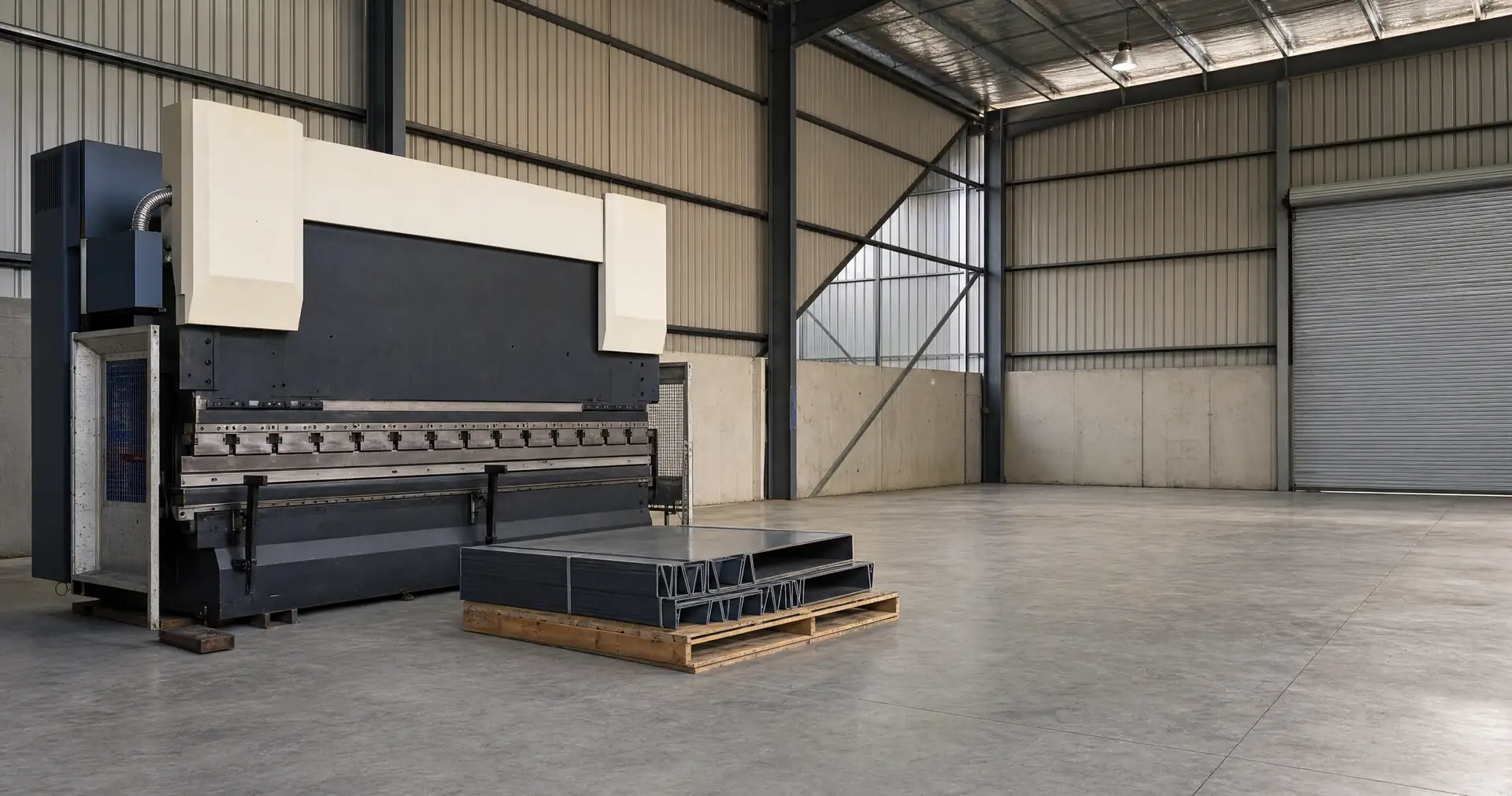
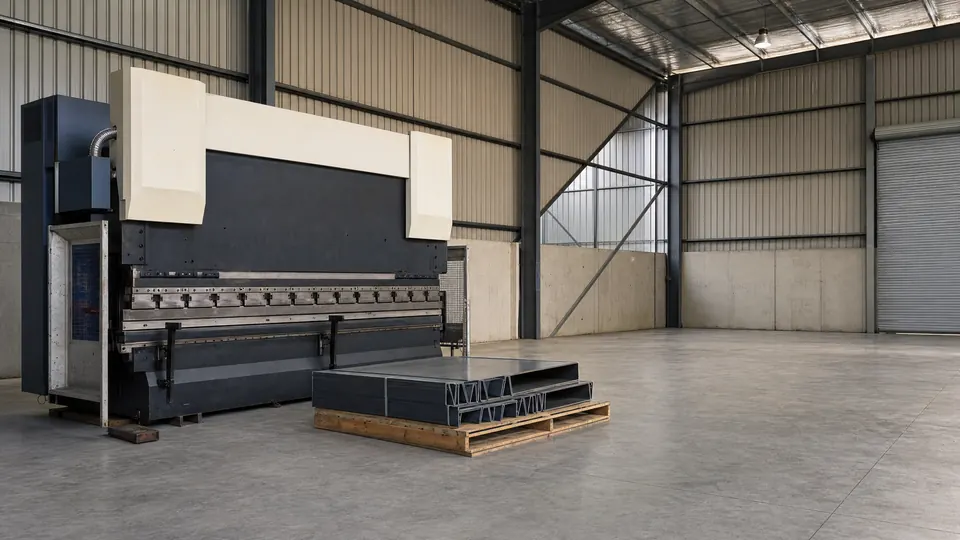
Mechanically simpler plant such as a press brake holds value better in the New Zealand market than a specialised machining centre, and the terms available reflect that.
The question worth answering first
Utilisation, before any conversation about rate.
A machine running one shift a day is an expensive way to do work that could have been subcontracted. The same machine on two shifts, or running unattended overnight, is a different business entirely, and the difference between those outcomes dwarfs anything a percentage point of rate does. The useful preparation for a plant purchase is therefore three numbers rather than three quotes. How many hours a week does existing work fill. What is currently being subcontracted that could come back in-house. What does the machine need to bill weekly to cover the repayment and the operator. Those three settle the decision, and they are also exactly what a credit team is trying to establish when it asks what the machine is for.
Indicative bands
How specialisation moves what is available.
Indicative bands only, and not an offer of credit. The driver is how many New Zealand buyers exist for the plant rather than how old or how expensive it is.
Plant profile
Typical maximum term
Deposit commonly sought
Notes
General purpose, new
60 months
10% to 15%
Widest lender pool. Supplier finance programmes commonly compete for this work.
General purpose, used
48 to 60 months
15% to 20%
Manual machines and mainstream configurations. Values are stable and lenders are comfortable.
Specialised, new
36 to 48 months
20% to 25%
The invoice is large and the New Zealand buyer pool is small, which is what the deposit is managing.
Specialised, used
24 to 36 months
25% or more
Configuration matters more than condition. Plant built around one customer is hardest to place.
Imported, no local support
Case by case
Often 30%+
The absence of a New Zealand service agent materially reduces what a lender believes it could recover.
Indicative New Zealand market bands for manufacturing plant finance. Illustrative, not an offer.
Worked scenarios
Three New Zealand manufacturers, illustratively.
Illustrative scenarios on stated assumptions. The figures are indicative and are produced by the calculator on this page rather than quoted by any lender.
Bringing subcontracted milling in-house
A Hamilton general engineering shop
The shop has been subcontracting milling for two years and the spend is now predictable. An installed machining centre package including tooling and commissioning is quoted at $230,000 plus GST.
On these assumptions a 60-month facility at an indicative 11% carries a repayment near $1,150 a week. The displaced subcontract spend covers a large part of that before any new work is won, which is the comparison that makes the case rather than a projection about future volume.
Indicative figures
Installed package
$230,000 + GST
Term
60 months
Indicative rate
11% p.a.
Indicative weekly
~$1,150
Adding a packing line ahead of a season
A Nelson food processor
A packing and labelling line is quoted at $340,000 plus GST including installation, and the business runs a strongly seasonal processing calendar.
In this scenario the seasonality is the exposure, because the repayment is flat while the revenue is not. The plant is also part production line and part building services, and the portion built into the premises is discounted by the lender in the same way a kitchen fit-out is. A deposit is sought for that reason rather than because of the amount.
Indicative figures
Project total
$340,000 + GST
Built-in share
Meaningful
Deposit
Sought
Exposure
Seasonal revenue
Tooling up for a single large customer
A Christchurch plastics manufacturer
An injection moulding machine and tooling configured for one customer’s components is quoted at $410,000 plus GST.
In this scenario the specialisation that makes the plant valuable to the business is what makes it difficult for the lender, and a 25% deposit with a shorter term follows. The customer concentration is the risk both parties are pricing, and it is a business risk rather than a finance one. Where the contract ends, the machine and the repayments both remain.
Indicative figures
Machine and tooling
$410,000 + GST
Deposit sought
25%
Term offered
Shorter than five years
Risk being priced
Customer concentration
Sector-specific costs
What sits outside a manufacturing finance agreement.
01
Building services
Three-phase capacity, compressed air, extraction and floor loading. Frequently discovered late and expensive to fund separately once the machine is on order.
02
Operator capability
A machine without a programmer or operator bills nothing while the repayment continues. Recruitment and training sit outside the facility.
03
Guarding and compliance
WorkSafe expectations on machine guarding, isolation and noise are operating obligations attached to running the plant rather than to buying it.
04
Consumables and tooling wear
Cutting tools, inserts and dies wear out inside a term. They are budgeted per job rather than financed with the machine.
05
Software subscriptions
CAM, nesting and scheduling software is increasingly subscription rather than perpetual, which means it cannot be financed as part of the purchase.
06
Downtime cover
A single-machine shop with a failed machine has no capacity. Service contracts and spares holdings are the answer, and both are operating costs.
Honest assessment
Where financing plant fits a manufacturer, and where it does not.
Where it fits
·Existing subcontract spend is predictable and large enough to bring in-house
·The utilisation plan reaches beyond a single shift, or unattended running is realistic
·The plant is a general-purpose configuration with broad New Zealand demand
·A local service agent exists, which matters for uptime and for the security position
·Installation and building services have been quoted and included rather than assumed
Where it does not
·Volume is unproven and subcontracting still costs less across a year
·The configuration is built around a single customer on a short contract
·No operator or programmer has been secured for the machine
·The building would need services work that has not been priced
·The plant is an import with no New Zealand service support behind it
Test the maths
A plant purchase, in weekly numbers.
Pre-filled with an installed production machine over five years. The number that decides it is what the machine has to bill weekly to cover this and its operator. Indicative only, and not a quote or offer of credit.
Because the security is worth less to a lender than the invoice suggests. A specialised machine has few New Zealand buyers, takes months to sell and realises less under pressure than mobile plant of the same price. A deposit reduces the lender’s exposure to that gap, which is why it is sought more often in this sector than in construction or transport.
Can installation and building services be financed?
Where they appear on the same quote as the machine, commonly yes. Rigging, foundations, three-phase supply, extraction and commissioning are frequently written into the same facility and are a meaningful share of a project. Where they are invoiced separately, they often end up on working capital instead.
What do lenders ask a manufacturer that they do not ask a contractor?
What the machine is for. Because the security is weaker, credit teams pay more attention to the utilisation case: what existing work fills, what is currently subcontracted, what shift pattern is planned. Those questions are trying to establish serviceability rather than to judge the business plan.
Does a local service agent affect the finance?
It commonly does. Plant with no New Zealand service support is harder to keep running and harder to sell, and lenders factor both into what they believe they could recover. An imported used machine with no local agent frequently attracts a shorter term and a larger deposit than the same machine with support behind it.
How does customer concentration affect an application?
Plant configured around one customer’s work is exposed to that customer, and lenders see it. It does not prevent a facility, and it commonly shortens the term and increases the deposit. Where the contract ends, the machine, the specialisation and the repayments all remain, which is the most common way a well-priced facility becomes a problem.
Is subcontracting cheaper than buying a machine?
Until the volume is there, commonly yes, because subcontracting carries no idle cost, no operator and no commitment. Once the subcontract spend is predictable and large enough to cover a repayment before any new work is won, the arithmetic reverses. That crossover is specific to the business rather than a general figure.
How long are lead times on production plant?
Frequently months rather than weeks on new machines, particularly where they are built to order or imported. Where a finance offer has an expiry that falls before the delivery date, that gap is worth resolving at the offer stage rather than discovering at delivery, because re-approval on the day is not always available.
Can staged payments on an imported machine be financed?
Commonly yes. Settlement is frequently staged with a deposit on order and the balance on delivery or commissioning, and the finance agreement is written to match. The first repayment usually falls a month after final settlement rather than after the order, which matters when lead times are long.
Is used production plant financeable?
Yes, and a substantial share of New Zealand manufacturing finance is written against used equipment. Terms are shorter and deposits larger, and lenders commonly seek an independent view of what the machine would fetch here rather than relying on the purchase price. A PPSR search is standard on any used purchase.
When is the GST claimable on financed plant?
Under a hire purchase, a GST-registered business is generally able to claim the GST on the full purchase price in the return covering the period the agreement begins rather than across the payments, subject to the accountant’s confirmation of the accounting basis used. Under an operating lease the GST is typically claimed on each rental as it is invoiced, again subject to the accountant’s confirmation.
What compliance obligations come with new plant?
Machine guarding, isolation and lockout procedures, noise assessment and operator competency are all WorkSafe expectations attached to operating the plant rather than to buying it. They carry real costs and are outside any finance agreement, and they are worth planning alongside the installation programme.
Does a single-machine shop need downtime cover?
It is worth considering, because a shop with one machine and a failure has no capacity at all while the repayment continues. Service contracts and a spares holding are the usual answers, and both are operating costs rather than something a finance facility addresses.
Indicative content only. Not personalised financial advice.
Financing a machine is a commitment that runs for years, and the repayments come out of the same operating cash flow as everything else. Modelling the weekly and monthly cost against the working-capital position before committing is what this site is built for. Borrowing at a level that stays comfortable through a quiet quarter, rather than only through a strong one, is widely regarded as the safer frame.
What this site is
A calculator and information tool. Not a lender, not a broker, not a registered financial adviser. Nothing here is personalised financial advice.
What the figures show
Modelled estimates based on the inputs shown. Not a quote. Not an offer of credit. Not a guarantee of approval, rate or fees.
What the lender decides
Final rates, fees, and approval are set by the lender after a CCCFA-appropriate assessment of the applicant's circumstances and credit decision.
Commercial disclosure
Equipmentfinance.org.nz earns a commission from Prospa when a visitor applies through this site and their application is approved. The commission is paid by Prospa, not by the borrower, and it does not influence the rate Prospa offers. Full disclosure on the partner page.
Tax, GST, and accountant framing
Tax-treatment statements (GST claim timing, interest deductibility, depreciation rates) are general in nature and subject to the accountant's confirmation on the specific business position. For material amounts, professional advice from a registered financial adviser or chartered accountant is widely regarded as the safer frame.