Equipment finance for New Zealand construction and civil.
Construction businesses finance more machines than any other sector on this site, and the constraint they hit is almost never the machine. It is the total of everything already financed.
Indicative only. Not a quote or offer of credit. Actual rates, fees, and repayments depend on the business profile and the lender's decision.
Sending to Prospa
Your $130,000 scenario
5 years at 10.00% . Prospa will ask a few quick questions, then provide a firm quote and funding if eligible.
Redirecting…
The short version
Construction equipment finance in five lines.
→Total commitments bind before any single machine does. Each facility is comfortable on its own. Assessed together they consume the serviceability headroom, and that arrives quietly in a growing business.
→Retentions are the cash-flow problem, not the rate. Money held back on completed work is capital the contractor has earned and cannot use, while every repayment falls due on schedule.
→Contract-backed purchases assess more easily. A named contract with a term attached gives a lender a visible repayment source, which is a different proposition from buying in anticipation of work.
→The season pauses and the schedule does not. Much New Zealand civil work slows over winter. A flat repayment across the year is the shape most contractors are carrying whether they planned for it or not.
→Indicative only. Every figure on this page is illustrative. Actual rates, fees and terms come from the lender after assessment of the business and the specific machines.
The sector
Plant-heavy, contract-driven and paid in arrears.
New Zealand construction covers residential building, civil and infrastructure, and the specialist trades that work across both. What they share is that capability is bought as plant, and that plant is expensive relative to the size of the businesses buying it. A three-person drainage contractor with an excavator, a truck and a trailer typically has far more capital tied up in equipment than a business of the same headcount in most other sectors.
The machines themselves finance well. Earthmoving plant and commercial vehicles both have deep national resale markets, hour meters and odometers give lenders something objective to price against, and the security is straightforward. Nothing on the asset side of a construction application is difficult.
The difficulty is on the business side, and it has three parts. Contractors accumulate facilities as they grow, and lenders assess a new application against total commitments rather than against the new machine. Payment terms in construction run long and retentions run longer, so revenue that has been earned is frequently not yet available. And a good deal of New Zealand civil work slows or stops over winter while the repayments continue at the same rate. None of that is a reason not to finance plant. All of it is a reason the sector page is about the contractor rather than about the digger.
Common plant mix
Excavator, truck, trailer
Indicative rate band
8% to 15% p.a.
Typical payment terms
30 to 60 days
Retentions
Held past completion
What gets financed
The plant a New Zealand contractor typically carries.
Each of these has its own page covering indicative price bands, terms and the assessment specific to it. This page covers what changes because the borrower is a contractor.
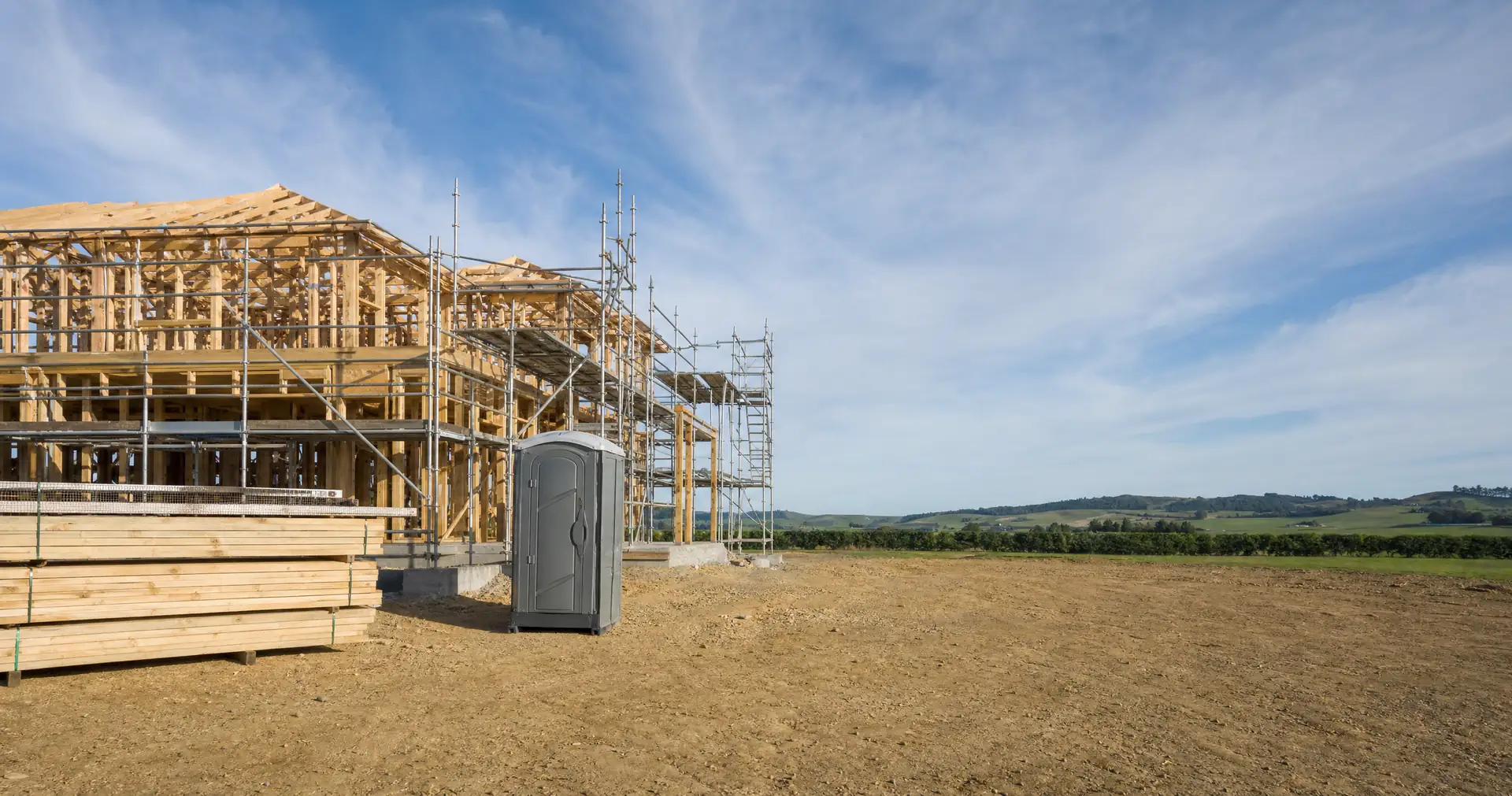
Residential construction, where much of the plant works.
Residential and civil work between them account for most New Zealand plant finance, and both are exposed to a season that pauses while repayments do not.
The quiet constraint
Total commitments, not the next machine.
A contractor with four machines on four facilities, each comfortable when it was written, is assessed on the total when it applies for a fifth. This is the single most common reason a straightforward-looking construction application struggles, and it arrives without warning because nothing changed except growth. Lenders routinely ask for a schedule of existing finance for exactly this reason. The practical implication is that the headroom to finance the next machine is decided by the facilities already in place rather than by the machine being bought, and a contractor who knows that number before applying is in a different conversation from one who does not.
Retentions
Earned, invoiced, and still not available.
Retentions are amounts held back from progress payments on completed construction work, released after a defects period. They are money the contractor has earned and cannot spend, and on a business running several contracts the accumulated total can be substantial. The Construction Contracts Act 2002 sets requirements for how retention money must be held, which improved the position for subcontractors, and it does not change the underlying cash-flow fact that the money is not available now.
The consequence for equipment finance is direct. A contractor can be profitable on paper, hold a healthy order book, and still find a repayment schedule tight because a meaningful share of the year’s margin is sitting in retentions. Lenders reading bank statements see the available cash rather than the earned revenue, which is why financial statements and an aged receivables position carry more weight in construction applications than in most sectors.
The practical response most contractors take is to keep a working-capital buffer sized against the retention position rather than against monthly costs, and to be honest with a lender about the receivables picture rather than presenting the order book alone. An application that explains the gap reads better than one that leaves a lender to find it.
The structural choice
Own the plant, hire it, or subcontract the work.
The crossover is utilisation. Above roughly half-time use across a year, owning typically wins on total cost. Below it, hiring commonly wins and can be stopped when a job ends.
Feature
Finance the machine
Dry hire
Wet hire
Subcontract
Cost when idle
Full payment
Full rate
None, off hire
None
Operator
The contractor
The contractor
Included
Included
Maintenance
The contractor
Commonly the hirer
The hire company
Not applicable
Availability at short notice
Always
Depends on the fleet
Depends on the fleet
Depends on the market
Effect on total commitments
Adds to them
None
None
None
Fits when
Utilisation is high and steady
A defined job with an end date
Peaks with no operator available
The capability is occasional
Hiring does not consume finance headroom, which matters more than it looks in a growing contracting business. Where total commitments are already the binding constraint, hire is frequently the only way to add capacity at all.
Worked scenarios
Three New Zealand contractors, illustratively.
Illustrative scenarios on stated assumptions. The figures are indicative and are produced by the calculator on this page rather than quoted by any lender.
Six machines, applying for a seventh
A Canterbury civil contractor
The business runs three excavators, two trucks and a trailer, all financed, and wants to add a 20 tonne machine at $290,000 plus GST against a subdivision contract.
In this scenario the contract makes the purpose clear and the total commitments are what the lender examines. The existing six facilities together consume most of the assessed serviceability, so the application turns on whether the new contract revenue is treated as adding capacity or as replacing work already counted. Presenting the contract alongside a schedule of existing finance is what makes that answerable.
Indicative figures
Machine price
$290,000 + GST
Existing facilities
6
Deciding factor
Total commitments
Contract
Named, with a term
Three years trading, first truck
A Northland drainage subcontractor
The subcontractor has an excavator and a float and has been hiring a tipper as needed. A used 10 tonne tipper is quoted at $105,000 plus GST.
On these assumptions a 48-month facility at an indicative 11% carries a repayment near $625 a week. The hire cost being displaced covers most of it on current volumes. The figure the contractor adds is the road user charges, which on a working tipper are substantial and which the hire rate had been absorbing invisibly.
Indicative figures
Truck price
$105,000 + GST
Term
48 months
Indicative weekly
~$625
Added cost
Road user charges
Seasonal work, strong summer and quiet winter
An Otago residential builder
The builder is weighing a $70,000 plus GST telehandler purchase against continuing to hire one through the building season.
In this scenario the utilisation is the whole question. The machine would work heavily from October to April and sit through winter while the payment continues. Hire costs more per working day and nothing in the off-season. The honest comparison is the annual hire spend against twelve months of repayments plus servicing and insurance, and on this workbook the hire is still ahead.
Indicative figures
Machine price
$70,000 + GST
Working season
~7 months
Idle months
Payment continues
Outcome
Hire, for now
Sector-specific costs
What sits outside every construction finance agreement.
01
Road user charges
Charged by distance and weight on most diesel vehicles. On a working truck this is a substantial recurring cost that no finance agreement covers.
02
Certification and inspection
Certificate of fitness on heavy vehicles and trailers, and periodic inspection on lifting equipment. Each runs on its own cycle with its own cost.
03
Operator competency
Licences, endorsements and machine-specific competency are operating requirements. WorkSafe publishes the expectations, and none of it is financed.
04
Insurance in transit and on site
Plant moves between sites, which is where much of the damage happens. Cover for both is normally a condition of the facility rather than an option.
05
Servicing and ground engaging tools
Buckets, teeth, tracks and cutting edges wear out inside a term. They are consumables budgeted against jobs rather than capital financed with the machine.
06
Transport between sites
Either a float and the truck to pull it, or a transport contractor. Either way it is a running cost that scales with how spread the work is.
Honest assessment
Where financing plant fits a contractor, and where it does not.
Where it fits
·Utilisation is above roughly half-time across a full year rather than across a season
·A named contract gives the repayment a visible source with a defined term
·The machine is a mainstream class with a deep New Zealand resale market
·Total commitments have been calculated and there is genuine headroom
·A working-capital buffer exists that is sized against the retention position
Where it does not
·The pipeline is genuinely uncertain, where hire can be stopped and finance cannot
·Existing facilities already consume the assessed serviceability
·The work is seasonal and the machine would sit idle through a New Zealand winter
·Retentions are large enough that the cash position is tighter than the profit suggests
·The capability is needed occasionally, where subcontracting carries no commitment at all
Test the maths
A plant purchase, in weekly numbers.
Pre-filled with a mid-range machine over five years. The figure worth adding is what the machine costs to run and move, which sits outside this. Indicative only, and not a quote or offer of credit.
The register on which security interests over construction plant are recorded.
FAQ
Construction equipment finance finance, NZ small-business questions answered
Do construction businesses pay higher equipment finance rates?
Not as a matter of sector policy. New Zealand lenders price the borrower and the asset, and construction plant has a deep resale market that supports competitive indicative pricing. What genuinely differs is that contractors more often hit a total-commitments constraint, which affects whether a facility is available rather than what it costs.
What is the total commitments constraint?
A new application is assessed against everything the business already owes rather than against the new machine alone. A contractor with several machines on several facilities, each comfortable when written, can find the combined servicing requirement consumes the assessed headroom. Lenders routinely request a schedule of existing finance for this reason.
How do retentions affect an equipment finance application?
Retentions are earned money held back until after a defects period, so a contractor can be profitable and still hold a tight cash position. Lenders reading bank statements see available cash rather than earned revenue, which is why financial statements and an aged receivables position carry more weight in construction applications than in most sectors.
Does having a contract help an application?
It commonly does. A named contract with a defined term gives a lender a visible repayment source, which is a different proposition from equipment bought in anticipation of work. It does not guarantee an outcome, and the assessment still turns on the business as a whole and on its total commitments.
When is hiring better than financing construction plant?
Below roughly half-time utilisation across a full year, hire commonly costs less once servicing, insurance and payments through idle weeks are counted, and it can be stopped when a job ends. Hire also does not consume finance headroom, which matters where total commitments are already the constraint.
How does winter affect a construction equipment facility?
Much New Zealand civil and residential work slows over winter while a flat repayment schedule continues unchanged. Seasonal repayment structures are less commonly offered in construction than in rural lending, so most contractors carry that mismatch themselves and manage it with a working-capital buffer.
What costs sit outside a construction equipment facility?
Road user charges on diesel vehicles, certificate of fitness and periodic inspections, operator licensing and competency, insurance covering plant in transit and on site, servicing, ground engaging tools, and the cost of moving machines between sites. On a working truck, road user charges alone frequently exceed the repayment.
Can a new contracting business finance its first machine?
Under twelve months trading it is harder, and a deposit or a personal guarantee is commonly sought. Under six months, asset finance on the machine alone is rarely available. A subcontract arrangement with an established contractor materially improves the position, because it gives the revenue a visible source.
Should plant be financed on separate facilities or one?
Both happen. Separate facilities let each term match the asset behind it, which matters because a trailer outlives a truck. One combined facility is simpler to administer and ties the assets together, which can mean a default on one reaches the others. It is worth deciding deliberately rather than by default.
What happens to plant finance if a main contractor fails?
The subcontractor’s repayments continue regardless. Retentions and unpaid progress claims may be at risk in the failure, which is precisely the situation where a working-capital buffer sized against the retention position matters. Lenders are commonly willing to discuss restructuring where the position is raised early rather than after arrears build.
Are attachments financed with the machine?
Commonly yes, where they form part of the same purchase. Buckets, hitches, breakers and augers are usually listed on the same schedule as the excavator. Ground engaging tools that wear out within a term are consumables and are budgeted against jobs rather than financed.
Does GST on financed plant work differently in construction?
No. Under a hire purchase a GST-registered business is generally able to claim the GST on the full purchase price in the return covering the period the agreement begins rather than across the payments, subject to the accountant’s confirmation of the accounting basis used. The treatment follows the finance structure rather than the sector.
Indicative content only. Not personalised financial advice.
Financing a machine is a commitment that runs for years, and the repayments come out of the same operating cash flow as everything else. Modelling the weekly and monthly cost against the working-capital position before committing is what this site is built for. Borrowing at a level that stays comfortable through a quiet quarter, rather than only through a strong one, is widely regarded as the safer frame.
What this site is
A calculator and information tool. Not a lender, not a broker, not a registered financial adviser. Nothing here is personalised financial advice.
What the figures show
Modelled estimates based on the inputs shown. Not a quote. Not an offer of credit. Not a guarantee of approval, rate or fees.
What the lender decides
Final rates, fees, and approval are set by the lender after a CCCFA-appropriate assessment of the applicant's circumstances and credit decision.
Commercial disclosure
Equipmentfinance.org.nz earns a commission from Prospa when a visitor applies through this site and their application is approved. The commission is paid by Prospa, not by the borrower, and it does not influence the rate Prospa offers. Full disclosure on the partner page.
Tax, GST, and accountant framing
Tax-treatment statements (GST claim timing, interest deductibility, depreciation rates) are general in nature and subject to the accountant's confirmation on the specific business position. For material amounts, professional advice from a registered financial adviser or chartered accountant is widely regarded as the safer frame.